 Nuvo Platform
 Nuvo Intelligence
 Customer Onboarding
 Vendor Onboarding
 Portfolio Management
 Payments & Cash Application
 Collections
 Alcohol & Beverage
 Apparel
 Building Materials
 Chemicals
 Distribution
 Food Service
 Heavy Equipment
 Manufacturing




Loading
The Cash Application Agent
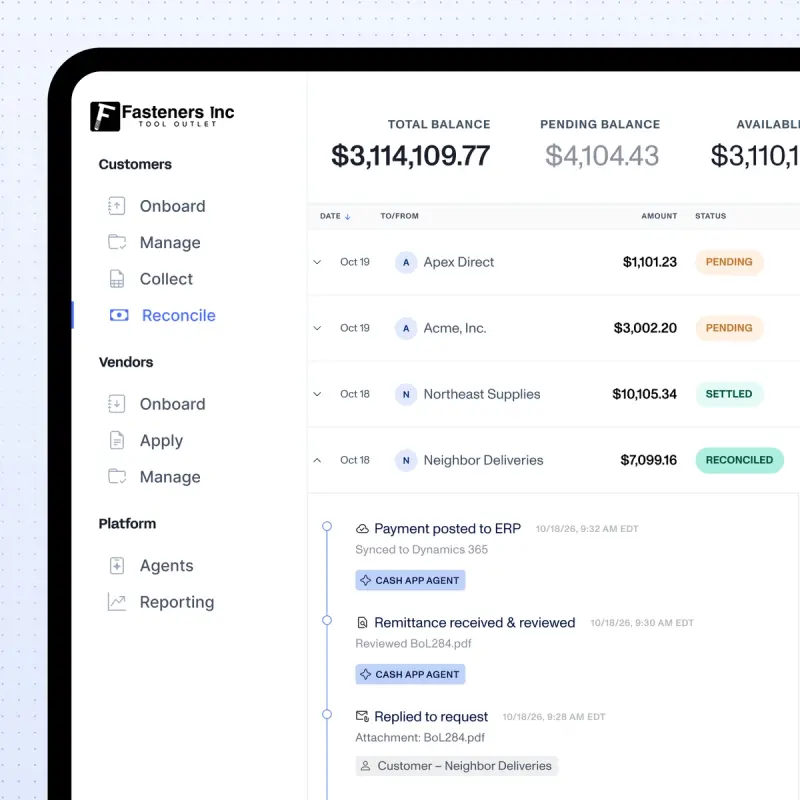
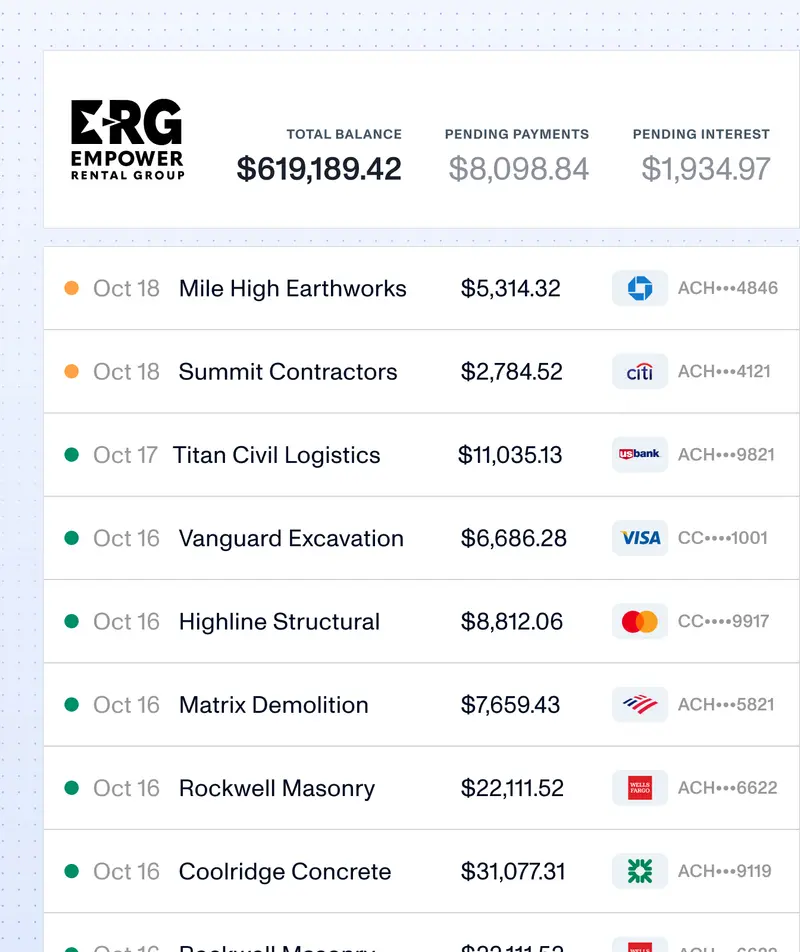
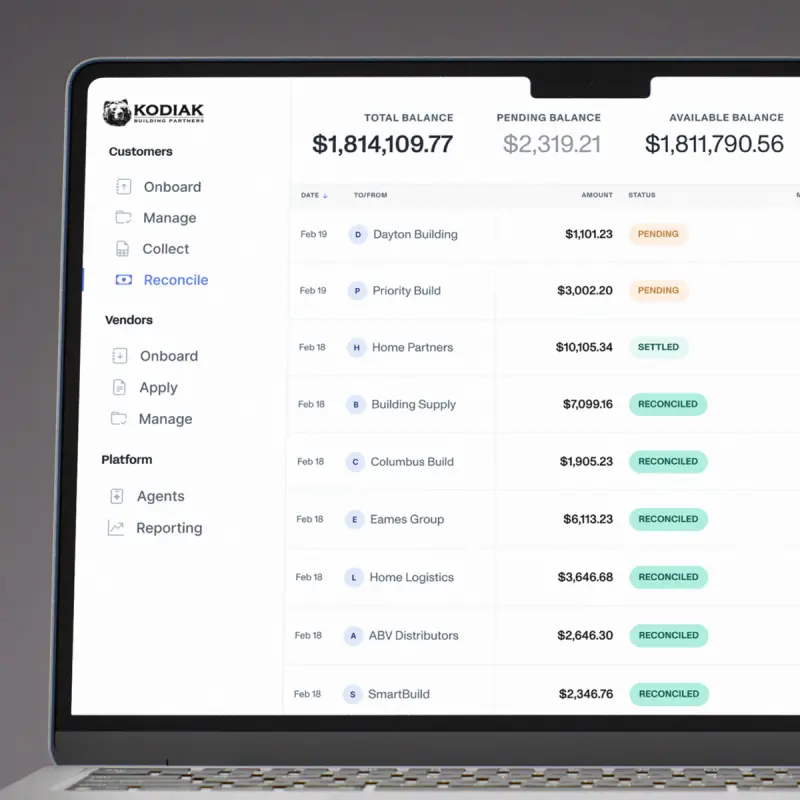
The agent matches incoming payments to open invoices the moment they're initiated, not three to five days later when they settle, so you can close the books days sooner.
The agent checks your inbox, AP portals, memos, and ERP balances, reaching out to the customer if nothing turns up.
You and your customer see payments as pending right away, so orders aren't held and nobody pays twice.
Every automated match comes with an audit trail, and applied cash posts back to your ERP automatically.
Nuvo’s cash application matching technology just works. It’s exactly the kind of infrastructure we want underneath us as we scale.

Jesse Clurman
The Cash Application Agent keeps working a payment until it's matched. It finds remittance, records short-pay reasons, and escalates the cases that need human judgement to your team.
Meet the agents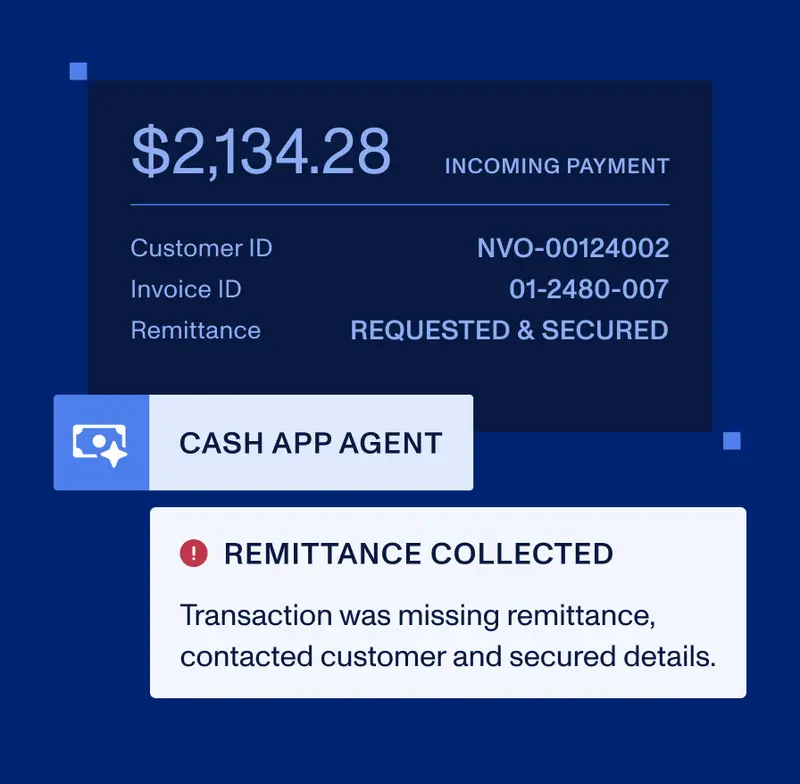
When a payment shows up without remittance, the Cash App Agent instantly emails your customer from your own email domain, reads the reply, and then reconciles the payment.
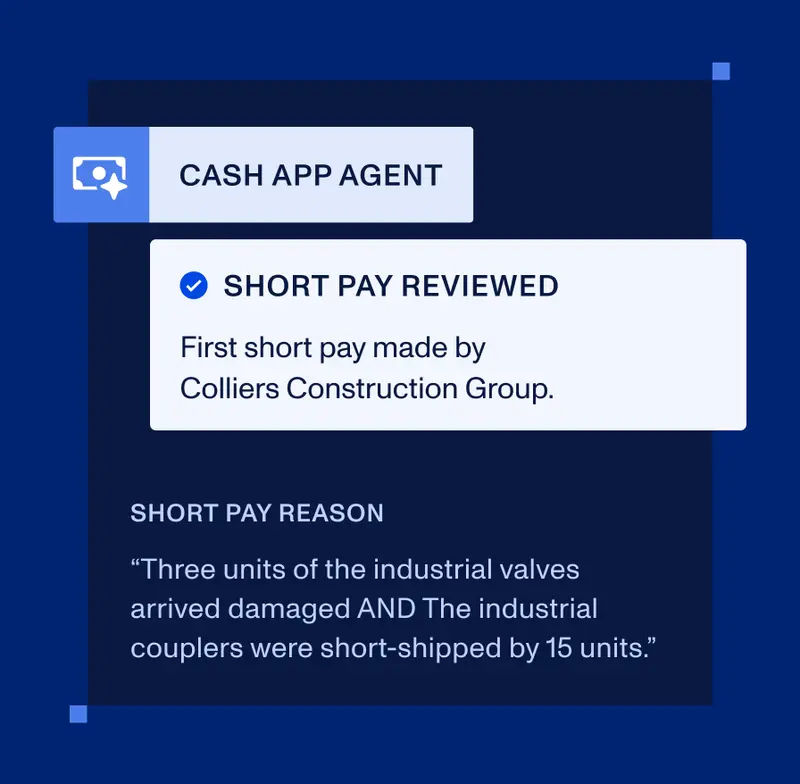
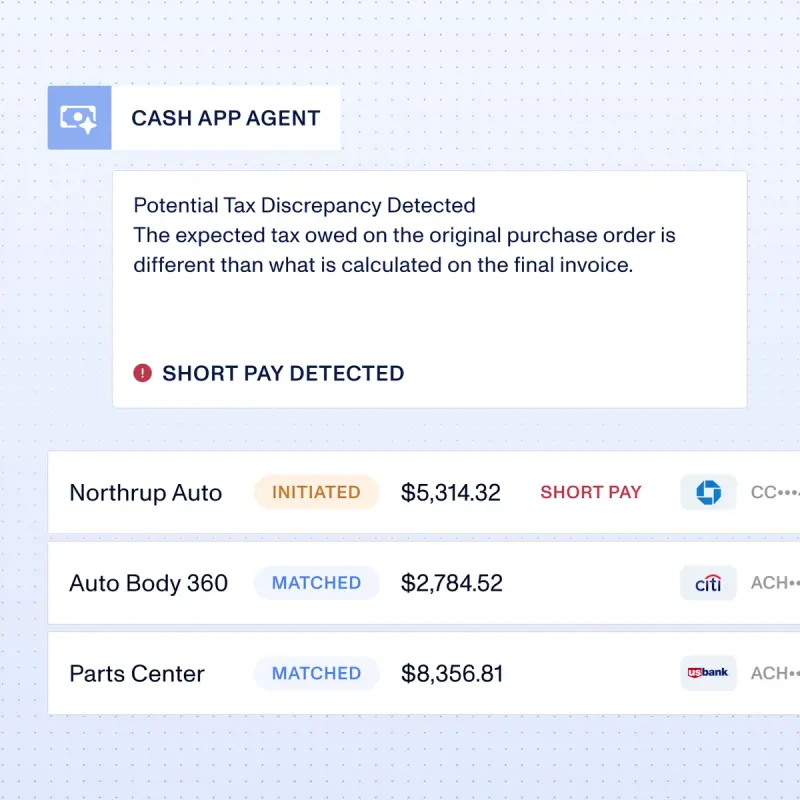
If a customer short-pays, they provide the reason in the payment flow. The Cash App Agent analyzes short-pays and looks for patterns to help you spot issues before they become trends.
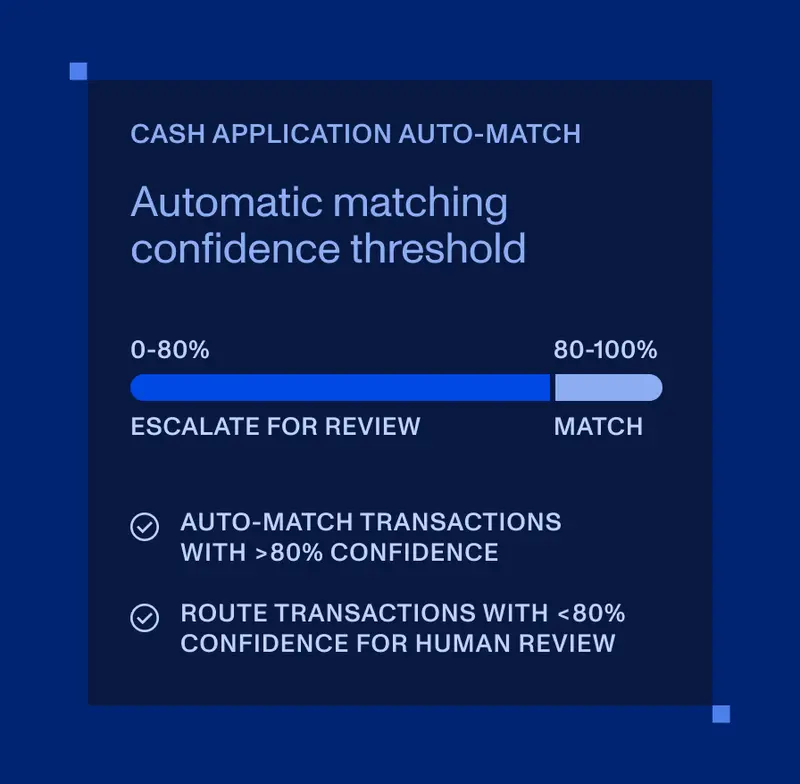
Choose how sure a match has to be before it automatically gets reconciled. Anything below that goes to your team with the agent's recommendation and reasoning attached.
Secure payment method storage
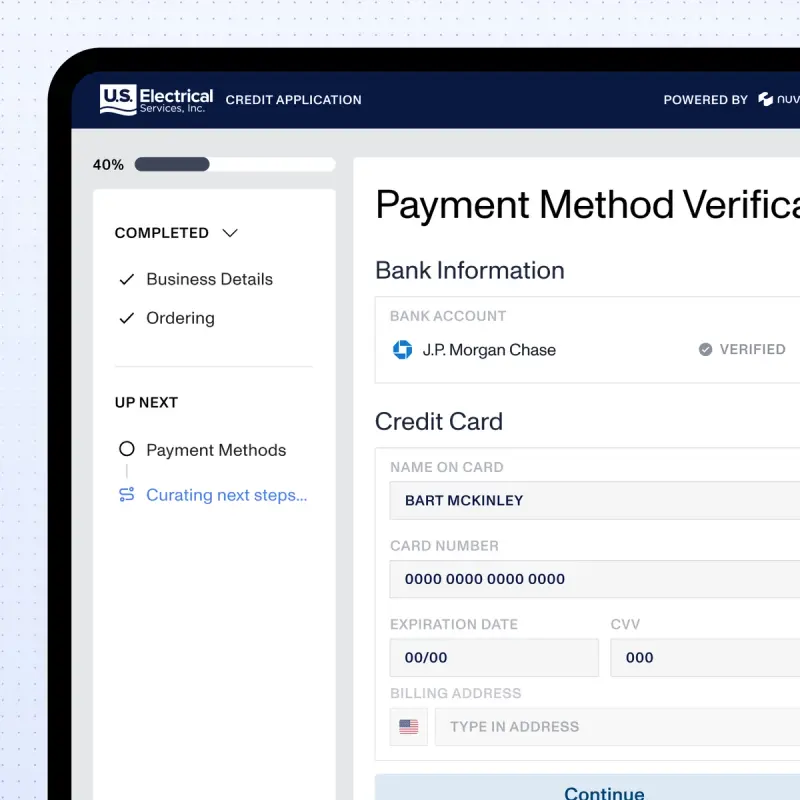
Verified bank accounts and cards are captured upfront and stored compliantly, so your customers can always pay quickly and easily.
Card details are tokenized in a PCI-compliant environment, and raw card numbers never touch your systems.
Verified bank accounts make ACH the easy way to pay, resulting in lower fees for both you and your customers.
Stored payment methods are always ready for repeat orders and autopay, as well as merchant-initiated debit when needed.
Branded payment portal
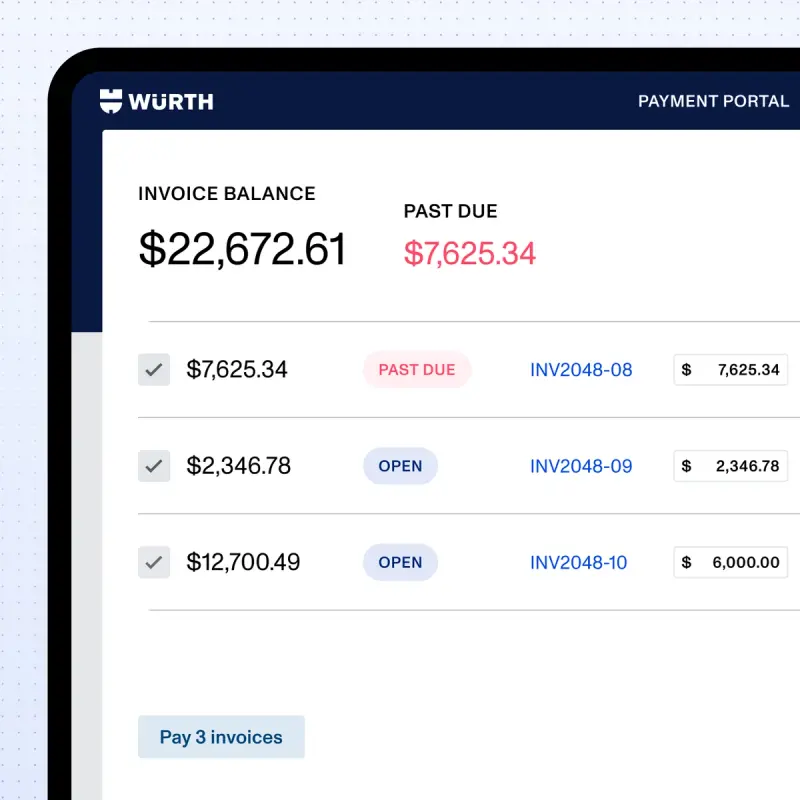
Customers see every open invoice, the credits they have on account, and what they still owe after in-flight payments, all in a portal that carries your brand.
They can pay one invoice or a dozen at once, use their stored payment methods, with any fees and timing details shown before they confirm. And they can do it all from either desktop or mobile.
Invoices are marked pending as soon as payments are initiated, so you never call on a customer who has already paid. And short-pays are handled up front, with customers providing the reason and uploading the evidence right in the payment flow.
Don't let your money sit in a pooled FBO that limits your access. With Nuvo, you get a settlement account in your company's name, that is FDIC-insured¹ and interest-bearing.
Funds settle in about 24 hours instead of the three to five days common with pooled FBO accounts, with no artificial holds.
The account earns above-average interest, so it’s you that is earning interest on your incoming payments, not a payment processor or bank.
Keep your cash in the settlement account to earn above-average interest or sweep it out to a primary bank account as soon as it settles. The choice is always yours.
Better with Collections
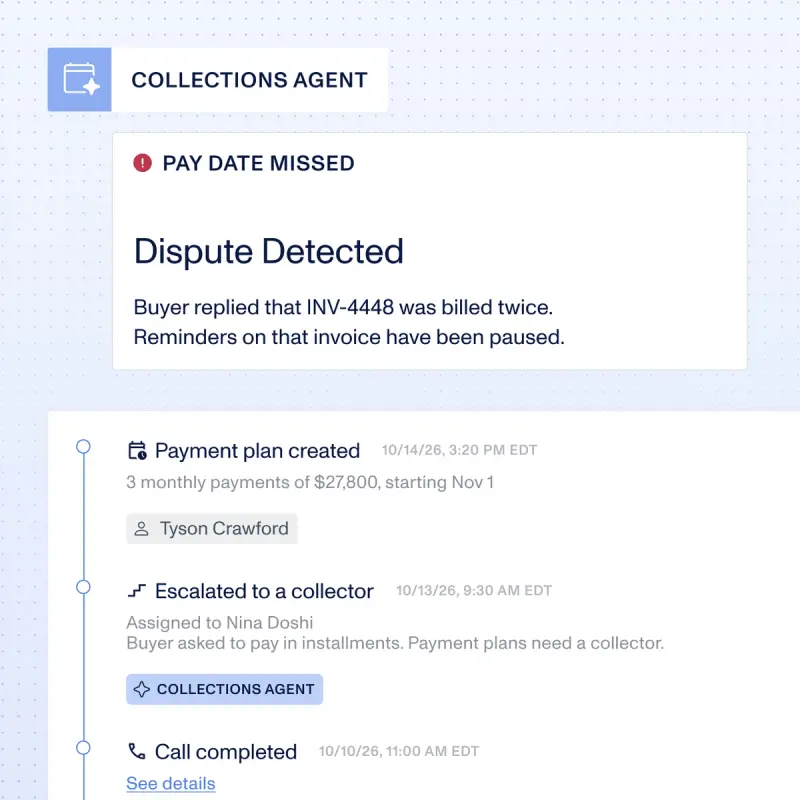
Add Collections, and the Collections Agent works past-due accounts on your policy across email, text, and phone.
Every reminder links to your branded payment portal, where customers pay with a stored method and the Cash Application Agent matches the payment right away.
Together, Pay & Reconcile and Collections make up the AR Suite.
The difference
| Traditional payment processors & cash application tools | Nuvo | |
|---|---|---|
| Transaction fees | High card, ACH, and processor fees on every payment | Fees that are lower than industry averages across ACH, card, and check lockbox |
| Where funds land | A pooled FBO account that takes three to five days to settle | An account in your name, powered by Column, settled in about 24 hours |
| Identifying the payer | Guessed from a bank memo | A unique account number auto-assigned for every customer |
| Matching | Starts after settlement is complete with auto-match rates that top out around 80% | Starts days earlier at the moment a payment is initiated, with auto-match rates >90% |
| Missing remittance | Someone digs through the inbox | The agent asks your customer for it |
Most cash application tools wait for the bank file, then hand anything without remittance to your team. Nuvo identifies the payer when a payment is initiated and goes after whatever's missing.
Payment A
$18,240 by ACH, sent to the customer's own account number.
The memo lists three open invoices.
The amounts match to the cent.
The agent applies it to all three invoices before the funds settle.
Payment B
$9,612 by ACH, $388 short of the open invoice.
No remittance in the memo or your AR inbox.
This customer has short-paid on sales tax twice this year.
The agent asks for remittance and sends the $388 gap to your team.
Nuvo Intelligence
Nuvo Intelligence brings agents to onboarding, decisioning, collections, and AR, so more of order-to-cash can run from the same data and controls.
Pay & Reconcile
Get a walkthrough of the Cash Application Agent matching payments as they come in, and see what your customers' payment portal looks like in your brand.
Learn More
Nuvo is a financial technology company, not a bank. Bank account and banking services provided by Column N.A., Member FDIC.
Nuvo is a financial technology company, not an FDIC-insured depository institution. FDIC deposit insurance covers the failure of an insured depository institution. Certain conditions must be satisfied for pass-through FDIC insurance to apply. Deposits in Pay & Reconcile settlement accounts are FDIC-insured through Column N.A., Member FDIC and Column’s Sweep Program Network Banks.
Both. Pay & Reconcile gives you a settlement account in your company's name, powered by Column, and Nuvo becomes your payment processor, handling every ACH, card, check, and wire payment your customers send into that account. Your primary bank doesn't change. The settlement account works as a clearing account, so you can sweep funds to your primary bank the same day and payments can land at your primary bank account as soon as same day. The settlement account includes access to real time payment rails, allowing for external fund transfers in seconds.
Nuvo is a financial technology company, not a bank. Bank account and banking services provided by Column N.A., Member FDIC.
Most payment platforms run your customers' payments through an FBO ("for benefit of") account: one account the software vendor owns, pooling money for many companies at once. The platform can't tell you much about a payment until it settles days later, and the interest on that pooled balance typically stays with the vendor.
Nuvo's settlement account is yours, and it's what makes the rest of Pay & Reconcile work. Every customer pays to its own account number, so every digital payment is tied to the right customer. The Cash Application Agent starts matching the moment a payment is initiated, so you close the books faster, customers see what they've paid even while it's pending, and nobody pays twice or gets a collections call about an invoice that's already paid. The account is FDIC-insured¹ and earns interest, and it lets Nuvo offer processing rates that are often more competitive than what you pay today.
The account also sits in front of your bank, not inside it. If you ever switch banks, your customers don't change a thing, because Nuvo re-points the account behind the scenes. This is the last time you'll have to ask customers to update where they pay.
Nuvo is a financial technology company, not a bank. Bank account and banking services provided by Column N.A., Member FDIC.
Most covenants we see are cash-concentration requirements rather than full exclusivity. Because you can sweep funds from the settlement account to your primary bank the same day, every payment still lands there by end of day, which typically satisfies them. If your covenant requires full exclusivity, we'll walk through the specifics with you.
No. Many teams start with new customers or a single segment and move everyone else over time. The full benefit of automatic matching arrives once every customer pays into the settlement account, because that's when every payment carries its own account number.
Yes. Verified bank accounts and cards are captured during onboarding and stored as tokens, and raw card numbers are never held. Approved methods stay ready for repeat orders and autopay, and you can initiate a debit when your terms allow it, so customers aren't re-entering details on every order.
Yes. Card details are captured and tokenized in a compliant environment, and raw card numbers never touch your systems. It's worth measuring your current process against that bar. Card numbers living in a spreadsheet or in CRM notes are all too common in trade, and none of it is compliant.
The Cash Application Agent reads incoming payments and matches them to open invoices in real time, pulling remittance details from your AR inbox, transaction memos, and connected portals. When no remittance is found, it checks balances in your ERP for a likely match. Matches that meet your confidence threshold are applied automatically, and anything else is surfaced as a suggestion with the agent's findings so your team can confirm.
Payments and remittance don't always arrive together, so the agent starts working whenever it sees a new transaction or a new remittance advice, and it keeps going until a match is found, including asking your customer for remittance through your connected inbox.
The Cash Application Agent asks for it. When a payment can't be matched, Nuvo contacts the customer to request the missing remittance, then reconciles once it comes back, without anyone on your team getting involved. If anything is still unresolved, the agent escalates the case with full context attached.
Short-pays are flagged as they land, with the reason captured rather than guessed at: a tax discrepancy between the purchase order and the final invoice, a disputed line, a credit that never got applied. Customers record the reason in their own words in the payment portal, and reasons are grouped so you can see whether a short-pay is a one-off or a pattern with a particular account.
Invoices flow into Nuvo from your ERP, and payment status, applied cash, and balances flow back automatically, so your ERP reflects what's actually happened rather than what someone had time to key in. The specifics depend on which ERP you use and whether Nuvo connects to it via API, webhook, or SFTP. Nothing changes about where your invoices are raised.
No, Pay & Reconcile is available on its own. When paired with Collections, every reminder the Collections Agent sends links to your branded payment portal, so customers can pay with a stored method and the Cash Application Agent matches the payment as soon as it's initiated. Together, the two make up Nuvo's AR Suite.
Pay & Reconcile
Customers pay in your branded portal with stored payment methods, funds land in a bank account in your name¹, and the Cash Application Agent matches every payment the moment it's initiated.

















EXPLORE PRODUCTS
One network for every step of order-to-cash.




