 Nuvo Platform
 Nuvo Intelligence
 Customer Onboarding
 Vendor Onboarding
 Portfolio Management
 Payments & Cash Application
 Collections
 Alcohol & Beverage
 Apparel
 Building Materials
 Chemicals
 Distribution
 Food Service
 Heavy Equipment
 Manufacturing




Loading

Building an order to cash (O2C) analytics practice is a daily habit your team keeps up, not a dashboard someone builds once and files away. Most finance teams already have the dashboard. Fewer have a rhythm around checking it, a person responsible for what it shows, and a habit of connecting one metric's shift to another before either one shows up as a problem in the accounts receivable (AR) aging report.
For definitions and benchmarks on the metrics themselves, starting with days sales outstanding (DSO), that ground is covered elsewhere. This piece is about turning those numbers into a system your team actually uses: what needs to connect first, who owns each number, and how a shift in the data becomes a decision instead of a data point nobody acts on.
A monthly recap tells you what already happened. Analytics, done as a practice, is the ongoing habit of watching your order to cash metrics move and acting on the shift while it's still small enough to fix.
The difference shows up in timing. A report gets compiled after the fact, reviewed once, and archived. A practice means someone is watching collection effectiveness or invoice cycle time on a set rhythm, catching a slide before it shows up in next quarter's bad debt numbers.
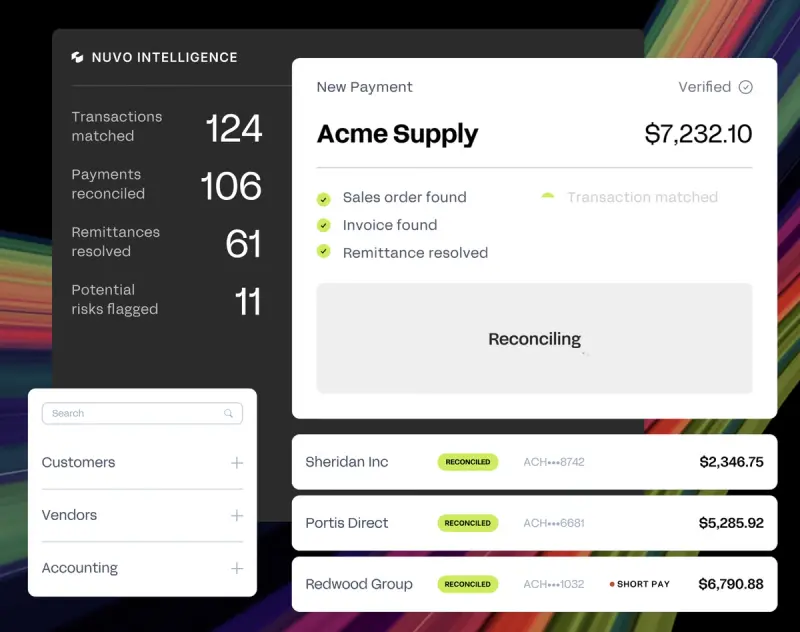
No metric is trustworthy until the data behind it comes from one place instead of four. Before a number is worth acting on, these need to be unified:
The common failure is pulling numbers from a disconnected ERP, a CRM, and a spreadsheet someone maintains by hand, and finding that none of them agree. A credit control team working from one balance while collections works from another creates more than confusion. It means whatever metric comes out the other end is only as reliable as the least accurate source that fed it, and nobody can say with confidence which version is correct.
Fixing this doesn't mean ripping out every spreadsheet. It means making sure the numbers in them trace back to a single, current source instead of a manual export someone remembers to update.
Assign an owner to every metric that matters, and set a cadence for how often they check it. Skip either step and the number turns into a chart nobody looks at.
The cadence should match how fast the number can hurt you:
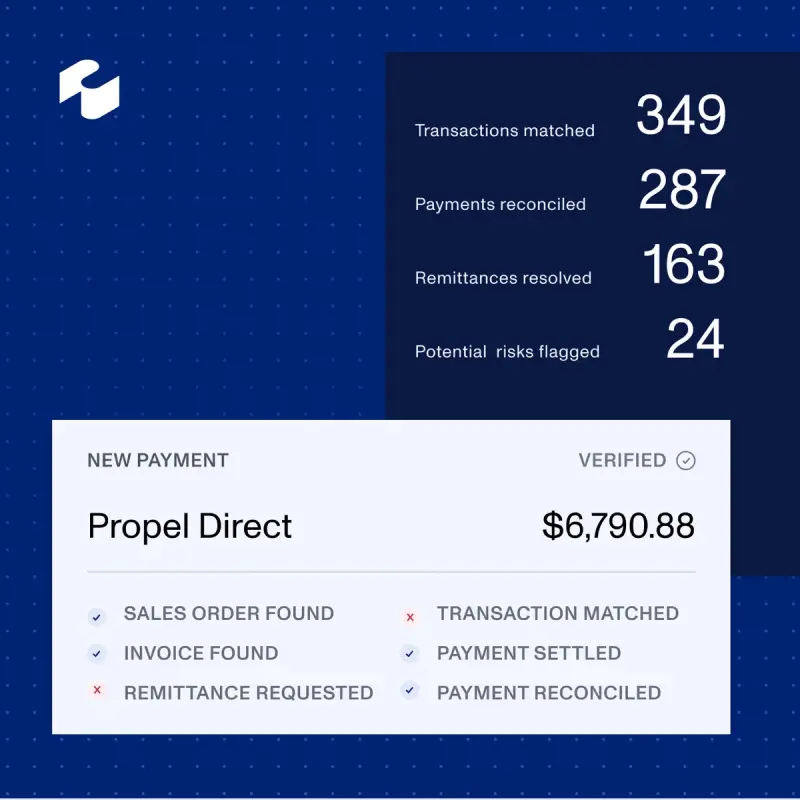
Four things separate a practice that holds up from one that stops getting used within a few months:
Most companies get one or two of these right. The practice holds up only when all four are in place at once, because a single data source with no owner is just as useless as a fast dashboard nobody agreed to check on a schedule. Adding a fifth data feed or a shinier chart on top of a broken foundation doesn't fix the gap. Fixing the four fundamentals first does.
A dashboard is a means, not an outcome. The outcome that matters is catching a risk or a cash gap early enough that a decision changes because of it, before it costs you rather than after.
Test that against your own setup: does your credit, invoicing, collections, and dispute data come from one source, does every metric that matters have a named owner, and can you see where things stand today instead of at last month's close? If the answer points at gaps in your data foundation, that's what to fix first.
Get order to cash numbers your team can act on the same day they change. .
A company that skips this step ends up with a dashboard that looks sophisticated and changes nothing, because no one owns it on a schedule that matches the risk.
Watching these metrics only pays off when it catches something early enough to act on. A few examples of what that looks like in practice:
Watched separately, on separate schedules, by separate teams, any one of these patterns can sit unnoticed for a full quarter. Nuvo's AI agents built for AR are increasingly the layer that catches these combinations automatically, since they're watching every account continuously rather than waiting for someone to notice two charts moving at once.
Order to cash metrics are individual measurements used to evaluate parts of the O2C process, such as DSO, CEI, payment timing, or dispute volume.
Order to cash analytics is the broader practice of collecting, connecting, monitoring, and interpreting those measurements to support decisions.
In other words, metrics are the signals. Analytics is the system for understanding those signals and deciding what happens next.
Accounts receivable reporting primarily focuses on accounts receivable, including outstanding balances, aging, collections, and payment activity.
O2C analytics takes a broader view. It connects accounts receivable with upstream and downstream activities such as credit management, order management, fulfillment, customer invoicing, disputes, and cash application.
That broader view helps teams identify whether an AR problem is actually being caused by something earlier in the order-to-cash process.
Common sources include:
The specific systems vary by organization. The important requirement is that the data can be connected consistently enough to create a reliable view of the order-to-cash cycle.