 Nuvo Platform
 Nuvo Intelligence
 Customer Onboarding
 Vendor Onboarding
 Portfolio Management
 Payments & Cash Application
 Collections
 Alcohol & Beverage
 Apparel
 Building Materials
 Chemicals
 Distribution
 Food Service
 Heavy Equipment
 Manufacturing




Loading
Book a demo

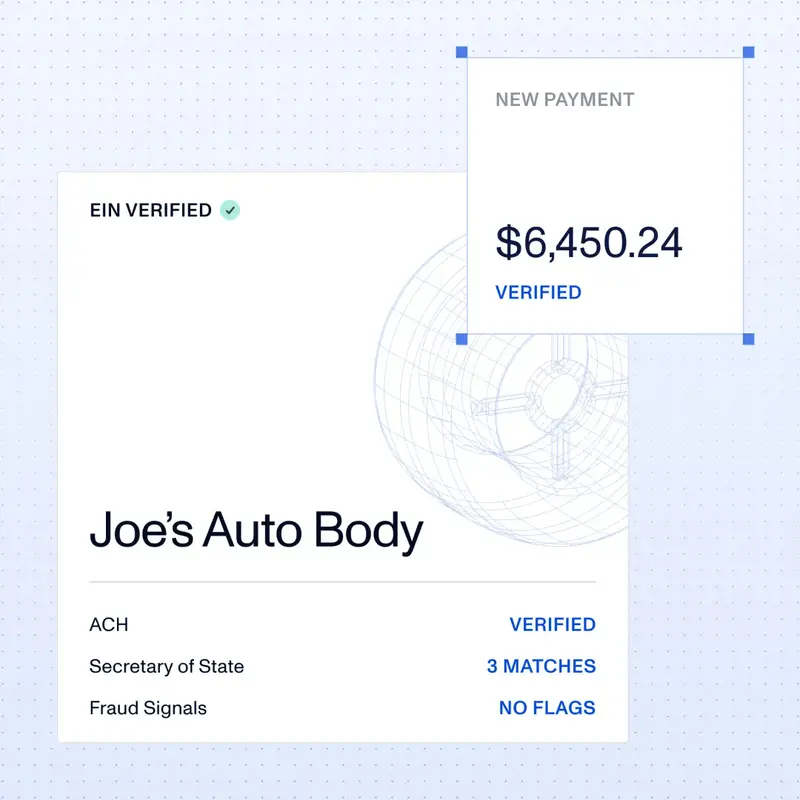
Vendor invoice management grows one email forward and one spreadsheet column at a time, until someone on the finance team asks why a vendor got paid twice, or why last month's payment landed in an account nobody recognizes.
The fix usually looks like a workflow problem: slow approvals, missed purchase order matches, an accounts payable inbox nobody has cleared in weeks.
Teams respond by buying software to speed up matching and routing, and the process does get faster. It doesn't get more accurate, because the errors start upstream, in the vendor record itself.
Vendor invoice management is the structured handling of a supplier invoice from the moment it arrives to the moment it's paid and reconciled against the books. That's a different task than simply paying bills as they show up. Paying bills means sending a payment when a due date approaches. Vendor invoice management means confirming the invoice matches what was ordered, verifying the amount and terms are correct, routing it through approval, and making sure the payment reaches the vendor's actual account.
Companies that treat these as the same task build controls that check whether an invoice got paid on time, not whether it should have been paid at all, or to whom. Duplicate payments and misdirected funds live in that gap.
A vendor invoice carries four categories of information, and each one answers a different question your accounts payable team needs settled before money moves.
The invoice number and purchase order (PO) number tell you whether a transaction is new or something you've already processed. Without a consistent numbering convention, a resubmitted invoice with a slightly altered reference number can pass right through matching rules built to catch exact duplicates.
The line items, quantities, and unit prices tell you whether what you're being billed for is what you actually received. Three-way matching against the purchase order and the receiving report catches overbilling before it becomes an approved payment.
Terms like net 30 or 2/10 net 30 determine both when a payment is due and whether an early payment discount is available. Get these wrong, and you either pay late fees or leave savings on the table.
This is the field most likely to be wrong, and the one that gets the least scrutiny. It's collected once, usually during vendor onboarding, and rarely reverified after that. A vendor's bank account or mailing address can change, through a legitimate update or a fraudulent one, long before anyone downstream notices.
An invoice arrives, either by email, portal, or paper. It gets checked against the purchase order and the goods or services received. It's routed to the right person for approval based on amount or department. Once approved, it's scheduled for payment and reconciled against the books.
Invoices come in through whatever channel the vendor uses, which for most companies still means a mix of e-invoicing portals, email attachments, and the occasional paper invoice. Data capture is the step where that invoice data gets pulled into SAP or another ERP system your team can work with, whether through manual entry or extraction through automated systems. This is also the point where a vendor's name, address, or remittance details on the invoice either match what's on file or don't, and a manual capture process rarely stops to check.
Once captured, the invoice gets matched against the purchase order and receiving records, routed for approval according to your policy, and scheduled for payment. Reconciliation closes the loop, confirming the payment cleared and the books reflect it accurately.
Most of the tooling built for this process focuses on the middle of the sequence. Optical character recognition and data capture tools pull information off a PDF or scanned invoice. Matching engines compare that data against purchase orders and receiving records. Approval workflow software routes invoices to the right people and tracks sign-off.
None of these tools check whether the vendor on the invoice is who they say they are, or whether the bank account attached to it still belongs to them. That gap sits upstream of the entire process, in the vendor data itself, and no amount of matching accuracy fixes a vendor record that was wrong, or has since gone stale, from the start.
A bad vendor record shows up in three specific ways, and each one costs money differently.
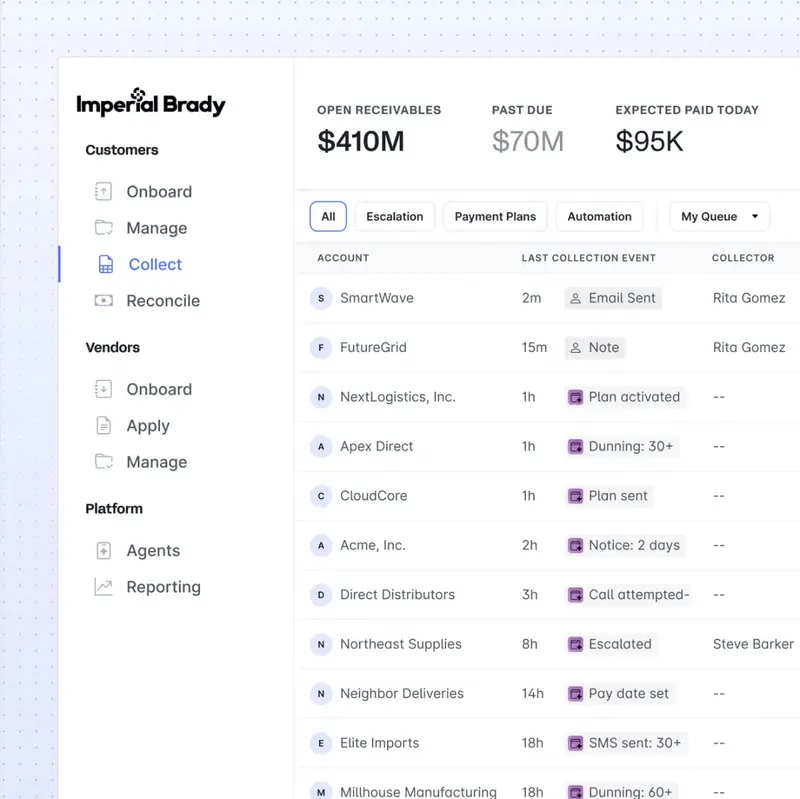
Automation and matching engines solve the workflow. They get invoices captured faster, matched more consistently, and routed without someone chasing down an approver on vacation. None of it re-checks the vendor record after day one, and remittance details are the field fraudsters target.
That's a Know Your Business problem, not an accounts payable one. Verifying a vendor's identity, confirming their bank account actually belongs to them, and collecting current tax documentation up front are what keep everything downstream, invoice management included, accurate.
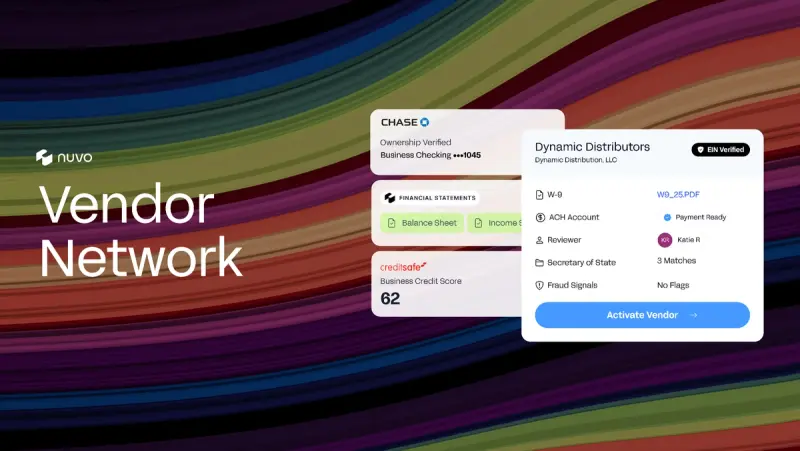
Nuvo's verified vendor onboarding checks a vendor's business identity against government registries, confirms bank account ownership before the first payment goes out, and collects tax documentation like W-9s and W-8 BENs up front, checking the tax details against IRS records. Verification doesn’t stop at day one either. Nuvo treats any change to payment details as a fresh check, re-running the account against the vendor’s legal name, tax ID, and registered address, so a redirect request gets flagged before the ACH goes out rather than after. It’s the same principle behind B2B trade credit automation on the customer side: the record stays current, and every process downstream inherits the accuracy. That verification is also what backs The Nuvo Network, a vendor ecosystem of 200,000+ verified businesses.
Pull your 10 highest-value vendor records and check three things on each: when the bank details were last verified, whether a W-9 is on file and current, and whether the same supplier appears under more than one name. If any of the three comes back thin, the problem is in the vendor record, not the invoice workflow. That's what Nuvo verifies before the first invoice arrives.
The reliable method is instant account verification through a direct connection to the bank, confirming the account exists and belongs to the business claiming it, not just that the account number is formatted correctly. This should happen once, up front, during vendor onboarding, rather than only inside the invoice approval workflow. Verifying early catches an ACH redirect attempt before a fraudulent account ever receives a payment.
When the same supplier gets entered into the system twice, once as "ABC Supply Co." and again as "ABC Supply Company," matching rules built around exact-name lookups miss the overlap, and both entries can get paid for the same invoice. That kind of error survives because the upstream step never got automated.
Ardent Partners' 2025 benchmarks show supplier onboarding fully automated at just 7% of organizations, against 41% for invoice approvals and 44% for payment scheduling. The parts of the process that move an invoice along got the investment. The part that establishes who's being paid didn't.
A vendor changes banks, or a fraudster impersonates a vendor and requests a change to remittance details, and if nobody reverifies that update, the next invoice gets paid to an account that isn't the vendor's.
The 2026 AFP Payments Fraud and Control Survey found that fraudsters primarily impersonate vendors or executives to request changes to payment instructions. Among organizations that experienced payments fraud in 2025, 33% saw manipulated Automated Clearing House (ACH) or wire transfer instructions, and 26% saw invoice fraud. Recovery is uneven: 30% recovered more than 75% of what they lost, and 20% recovered nothing at all.
When a vendor record was never verified in the first place, there's no clean way to show a controller or an external auditor that the payment reaching that account was actually authorized by the business it claims to represent. That's a compliance gap as much as a financial one, and it usually surfaces during a year-end audit or right after a fraud loss has already happened.
Ardent Partners' 2025 benchmarks put the all-inclusive cost of processing a single invoice at $9.84 on average. The spread is wide: the top-performing 20% of accounts payable teams process an invoice for $2.65, while everyone else pays $12.42. Ardent's top performers pay 51% of invoices without a person touching them. Everyone else manages 29%, and that gap drives much of the cost difference. Manual costs rise with headcount; automated costs largely don't.
At minimum, revisit a vendor's bank details and tax documentation annually, since W-9 information can change with a business's structure or ownership. Bank details deserve ongoing attention rather than a fixed annual check, since ACH redirect fraud usually shows up as a single unexpected change request. Flagging any requested change to remittance information for a fresh verification step, regardless of when the last review happened, catches most attempts before a payment goes out.